Bologna is likely one Italian city often overlooked by many foreign tourists. Best known, by us Americans, as the home to the Bologna lunch meat (the worst kind of processed lunch meat). However, here in Italy, it’s known as Mortadella and has flecks of fat and pistachio, and is surprisingly delicious. But even with its namesake as an American food staple, the city is actually really known as home to the tortellini.
And so begins our food journey.
For my daughter’s recent 15th birthday, we visited Bologna for our mother-daughter weekend. During the three days, we discovered Bologna has way more to offer than just pasta. We got lucky this trip fell between one of the breaks in the lockdown for COVID. Little did we know this was the last time I would get on a plane in 2020.
Bologna is old and dates back to the 3rd century BC. It’s home to the oldest university in Europe, (80,000 students). If you can make time to spend a weekend in Bologna, here are a few things to add to your list:
Learn to Make Tortellini: The Hometown Pasta

I’m going to start with food because that is the #1 reason to visit Bologna! We took a pasta-making class with Dennis @PastaRisottoBologna which we booked on Airbnb Experiences. Nothing is more authentic than cooking in his small apartment kitchen. He gave us a little history about the pasta, had everything set up and ready to go. We made five different kinds and then enjoyed dinner with sampling of meats, cheeses and wine.
Traditionally, the pasta in Bologna is made from two ingredients: flour and egg. The most common fillings in the tortellini are a meat combination of Mortadella, pork and Parmesan, or spinach and ricotta.
After learning to make tortellini, I now savor it so much more than before. What a painstaking process to make the filling, combine and roll the dough and then twist the little pastas into pure perfection!
Related: Want an Authentic Italian Experience? Learn to Make Homemade Pasta in Rome
Take a Food Tour to Sample Italy’s Best
The city offers so many options to experience its culinary delights, and a food tour is a perfect way to get an overview on the food, culture, and history. We took a food tour with Delicious Bologna, and luckily had its owner Mattia (a native to Bologna) give us a private tour.
Because of COVID, tourism was down in the city, and the tour itself, as well as many of our stops, were limited. We met Mattia across the street from the Torre degli Asinelli for a brief introduction to the city and walking tour around some of the major tourist highlights.
Our first stop was Caffe Terzi, which happened to be the coffee shop I had stopped in at earlier that day to grab a cappuccino. We had to wait a few minutes because the shop could only hold four customers with the restrictions. We waited a few minutes, ordered, and watched the owner work her magic. They make a mean cup of jo. Choosing between three kinds of beans, she carefully weighed the freshly ground beans and then made one of the best cups of cappuccino I have had.
Not far away from this shop, we walked to the nearby pasta factory, which they opened just for us. We watched one of the employees roll out the dough and very quickly make a batch of meat tortellini to be sold in the shop — Bruno e Franco– across the street, owned by the same family.
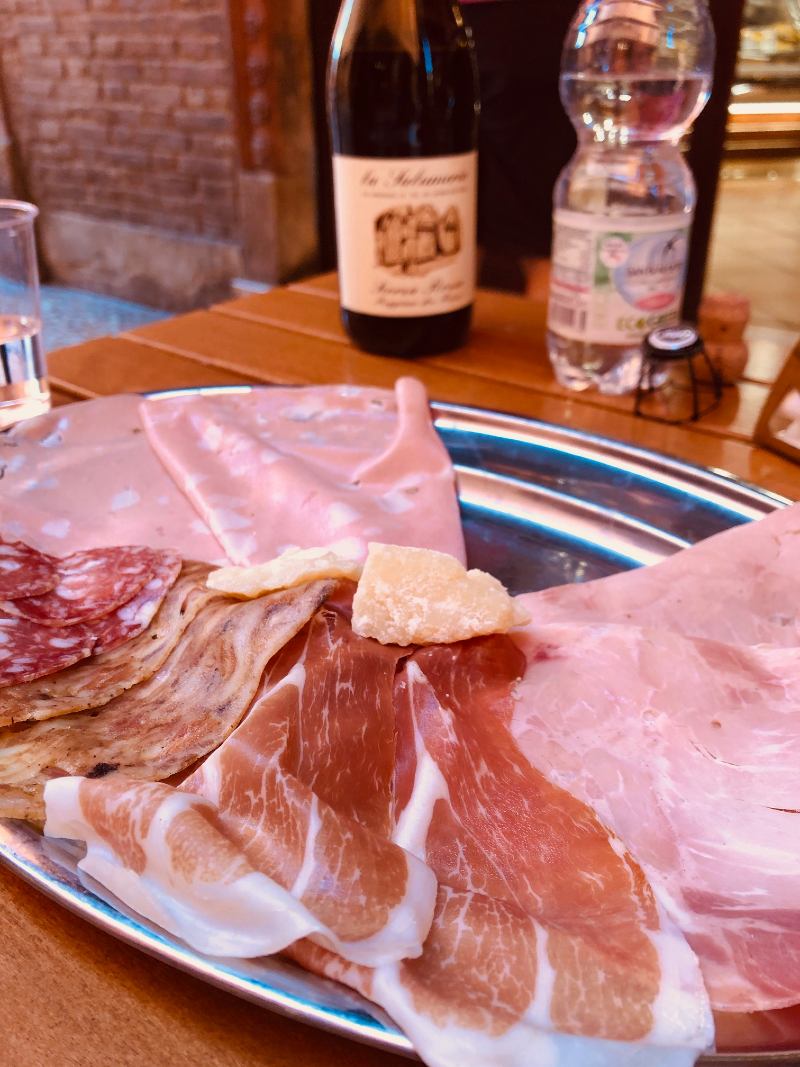
After seeing how they made the pasta, we walked across the street to the shop to sample a variety of local meats, cheeses, and balsamic vinegar, as well as learning about the quality and certifications for each.
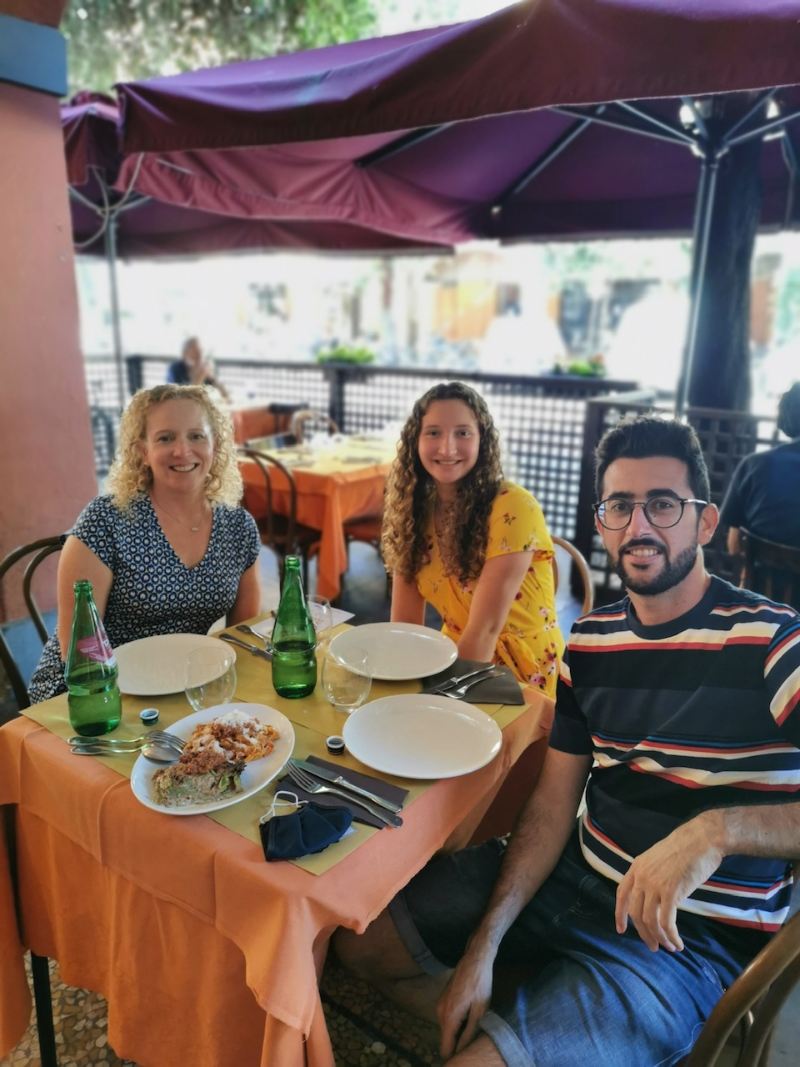
While wandering through the quaint and colorful streets, we stopped to sample Roman pizza. Mattia explained that Bologna is not known for pizza, but this location was worth a small tasting. Already feeling a bit full, we were getting excited for lunch. We stopped at Ristorante De Bertino, where our table was waiting. It was a long-time Trattoria with outstanding food. We had tortellini in broth, lasagna with green noodles, and tagliatelle in Bolognese, plus wine. It was just a small sampling of each so we had room to taste them all.
Our final stop on the trip was for a bite of homemade gelato from Cremeria Mascarella. Because when in Italy, it’s important to each as much gelato as you can find, especially the good stuff.
Related: Mother-Daughter Weekend: 4 Tips for Making a Memorable Trip
Climb the Torre degli Asinelli
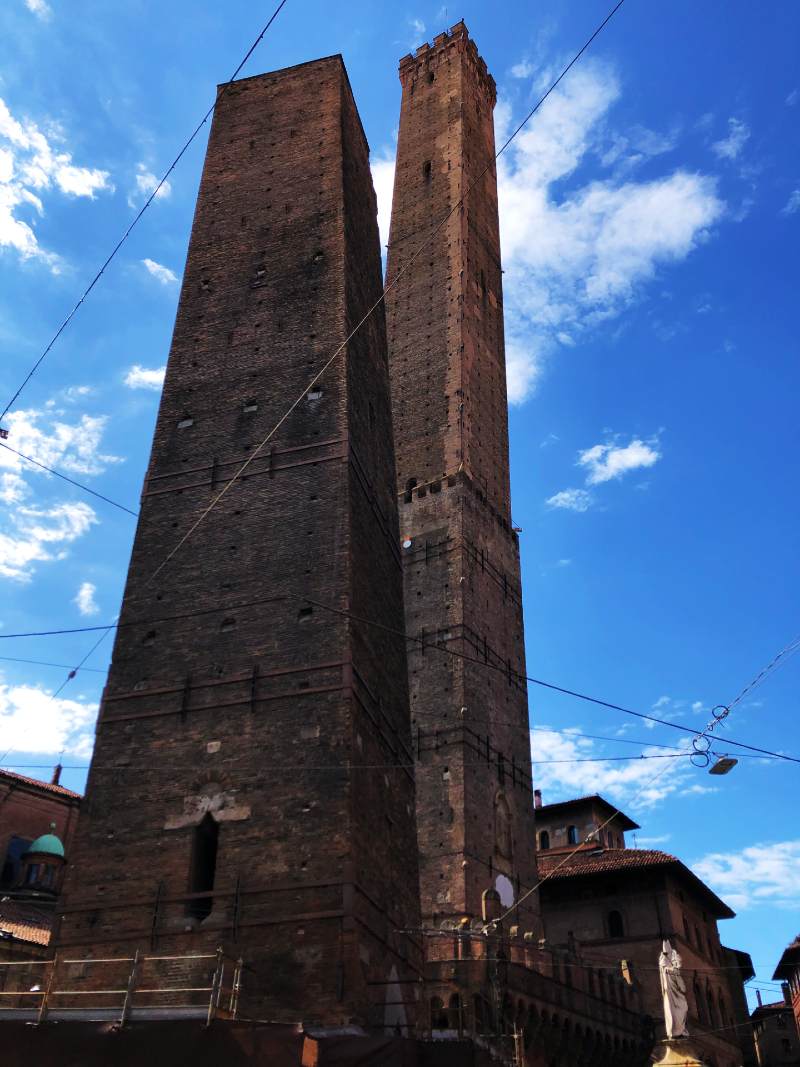
In the middle of town are two of 10 remaining towers from the middle ages. Back in medieval times, these towers (around 100 of them) lined the city skyline. These towers originally served no purpose other than to show how much wealth you had. Later on, they were useful in helping defend the city. The only tower left to climb is Torre degli Asinelli, which is not the leaning tower, but right next to it. It’s easy to buy your ticket online and then climb the 498 steps to the top for an amazing view of the city and neighboring hills.
Just down the street is another tower which has one room as a bed and breakfast. While you can’t sleep at the top, you can get to the terrace on the top, often rented out for parties.
Related: What to Know for the Best Walking Tour Experience in Any City
Visit the Basilica di San Petronio
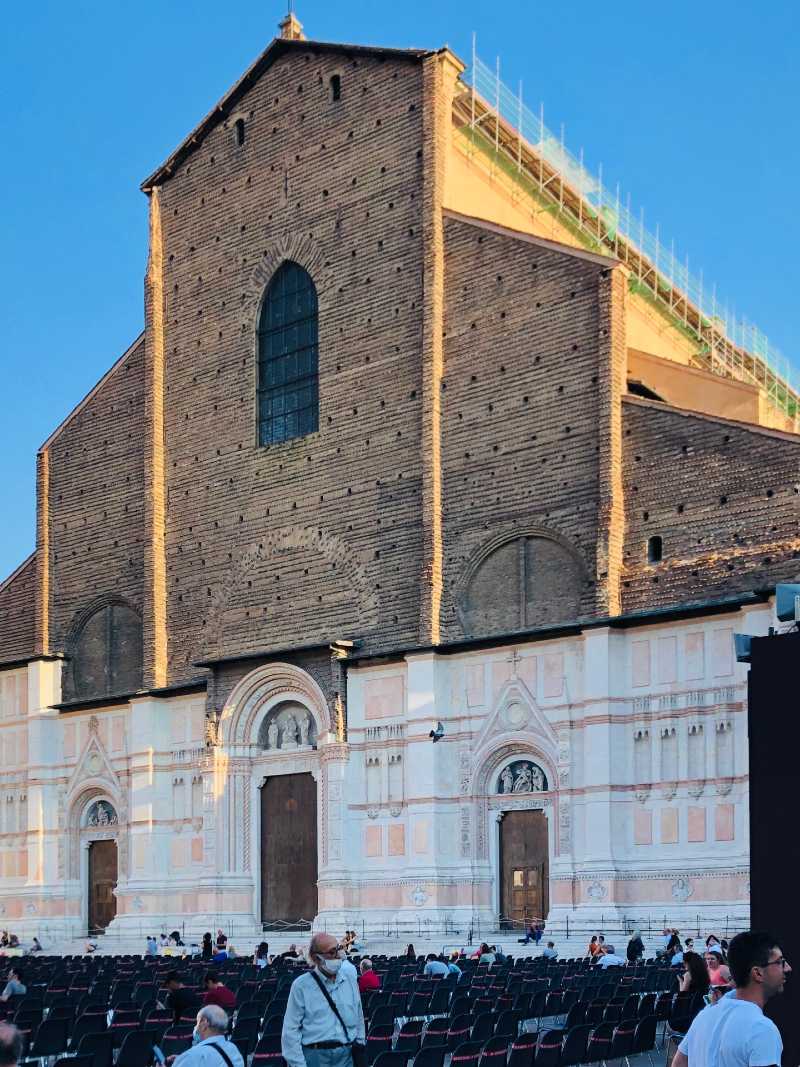
You really can’t miss this giant church, which looks half finished, in the middle of the Piazza Maggiore. It looks only partially finished because it is. The pope in the 16th century put a stop to the construction because it was just too big!
A few things to note about this church. The first is the guards out front. The guards are there because of a particular fresco by Giovanni da Moderna inside which depicts the devil devouring Mohammed in the Last Judgement. Twice, people have tried to bomb the church. You do have to pay to see that in detail, but if you look carefully on the left side of the church, you can many times catch a good glimpse as they illuminate the painting for paying visitors.
This was one of the more interesting churches we have been to. Each of the chapels around the church has a distinct design and it’s worth wandering around.
The other thing not to miss is the meridian on the left side of the church. There is a small hole in the ceiling reflecting light along the meridian on the floor designed by Giovanni Cassini. At noon when the light shines in, the meridian displays the day of the year.
Whisper to the Wall at the Palazzo Podestá
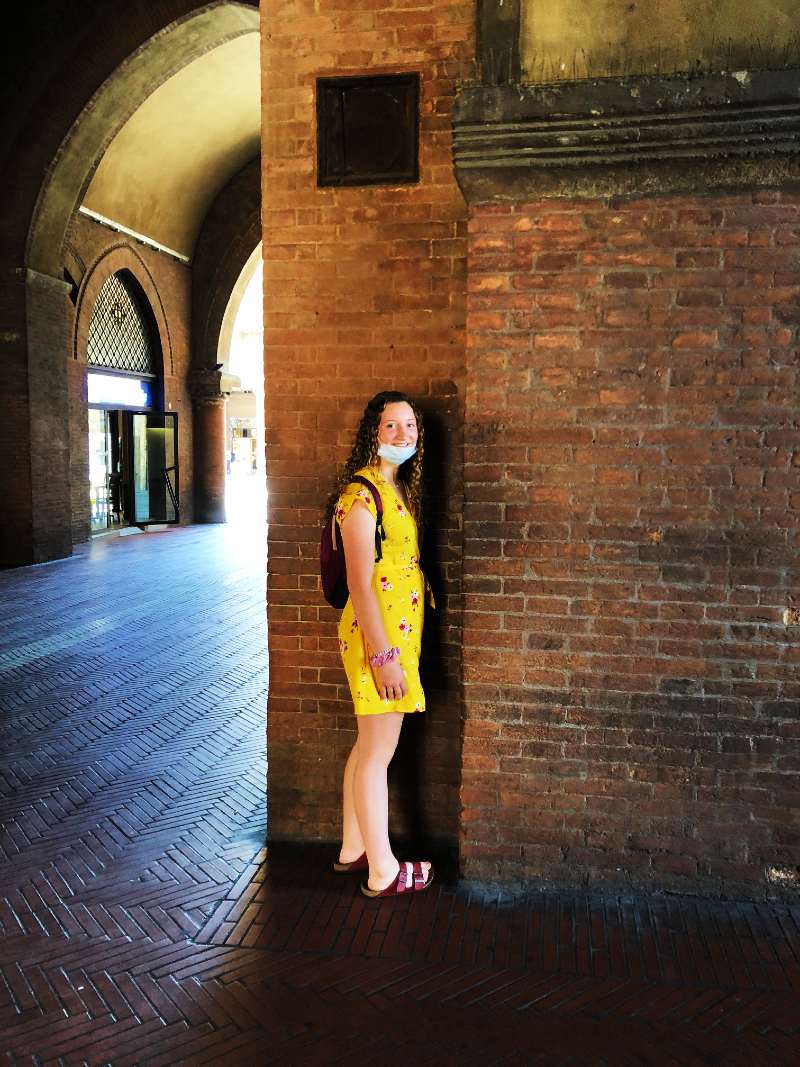
Across the plaza from the church is the Palazzo Podestá, now home to the Bologna visitor center. When walking through the arch, you’ll likely see people standing in the four corners and talking to the wall. No, they are not crazy! If you stand in one one corner and talk quietly, put your teenagers or other traveling companion in the other corner to listen. It’s some pretty amazing acoustics. Legend has it that is where priests went to hear the sins of the lepers.
Wander Kilometres of Porticos
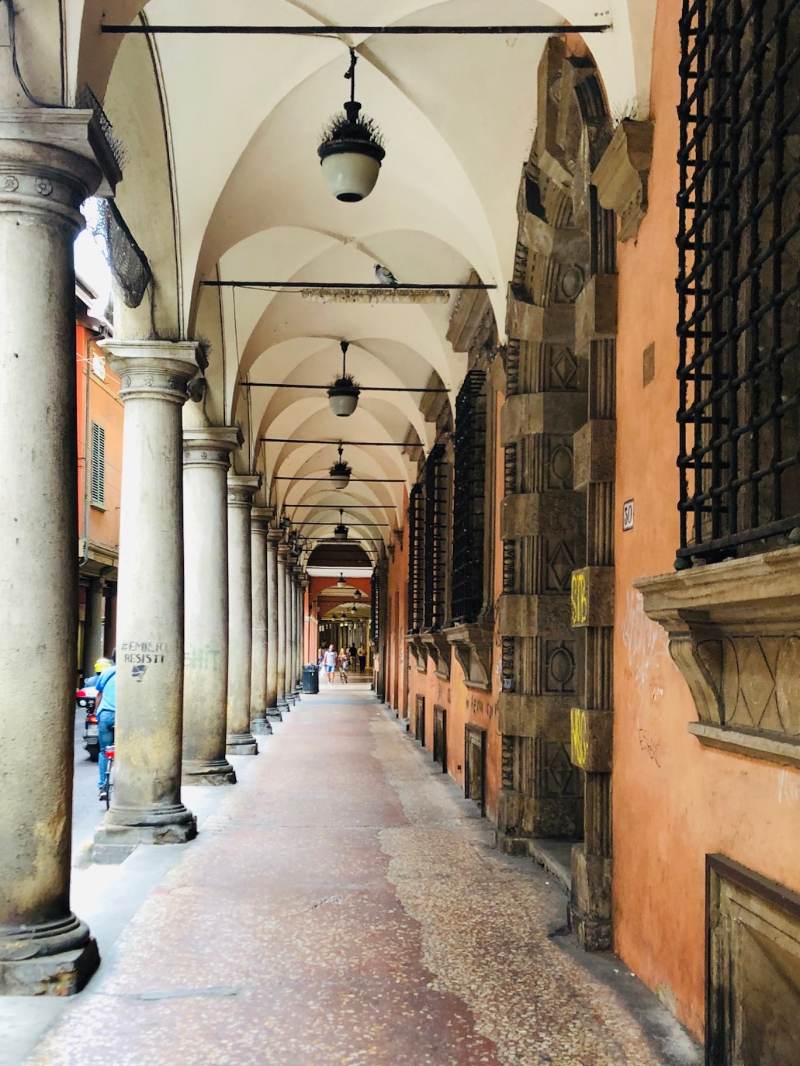
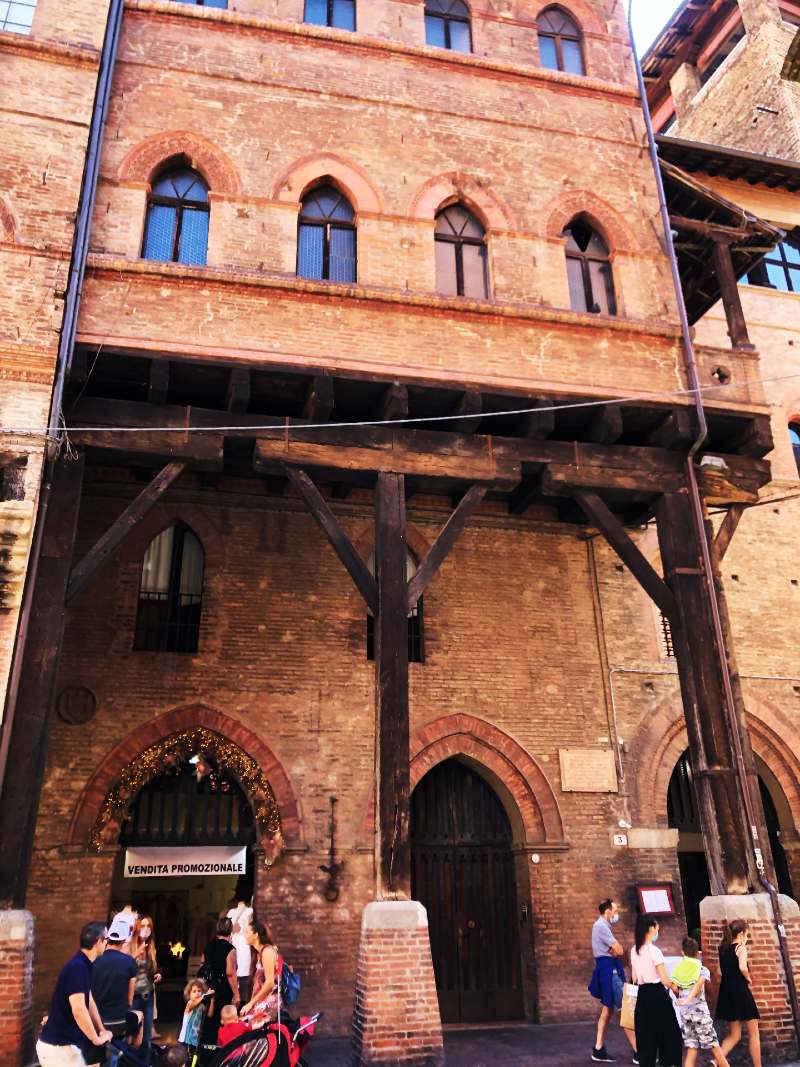
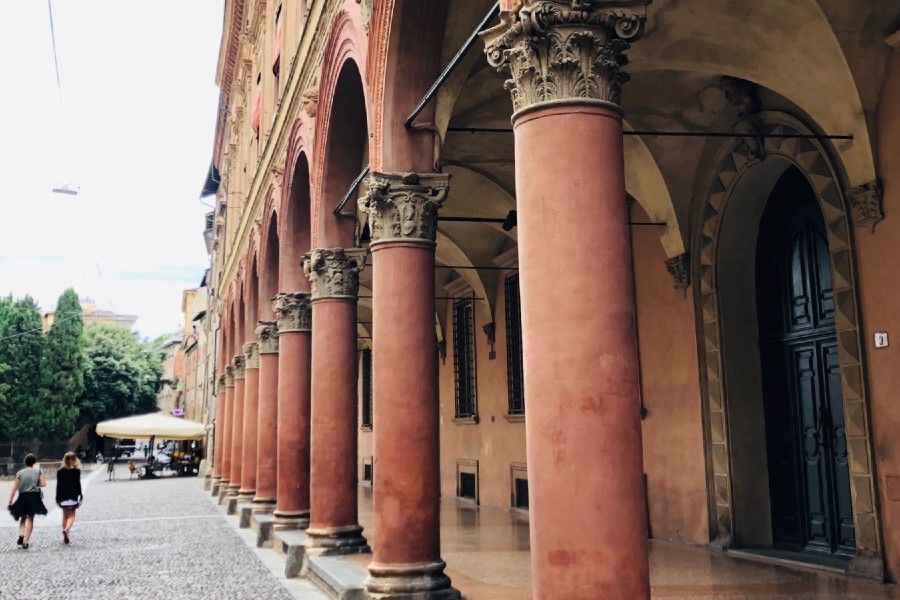
Bologna has approximately 40 km of porticos around the city, which are basically covered walkways, providing shade and protection from the rain. Should it ever rain. Our guide told us that these were built back between the years 1,100 and 1,200 when students came from all over Europe to study at the university. The city needed more housing and in order to make additional living spaces, they extended the buildings out above the shops. One of the few original wooden porticos is right next to the two towers.
Discover the Hidden Canal Behind the Door
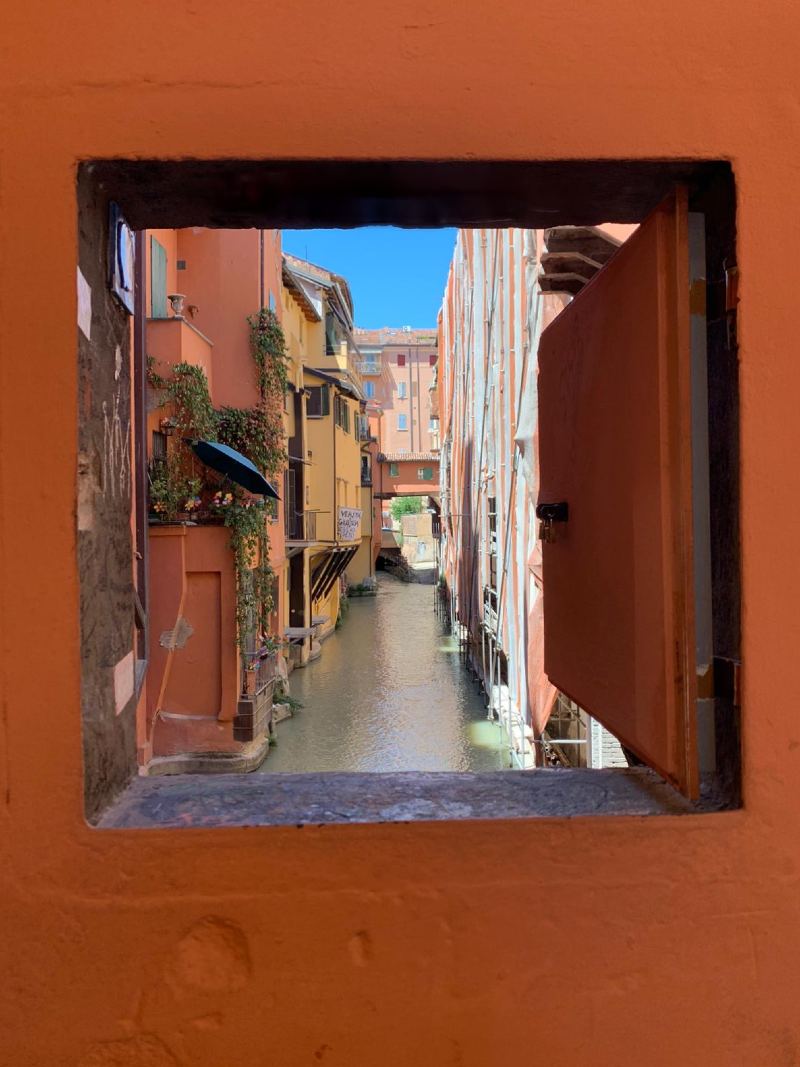
Seeing these canals was on my daughter’s must-see list, but she didn’t tell me. Instead during our food tour, we walked down Via Piella past this door with a window in the red-orange wall just next to a restaurant. A lady was standing and taking pictures. My daughter says: Mom, it’s the hidden canal! So it was. Turns out the city had tons of canals running it through it to power giant water wheels to spin silk and to transport goods. Later in the 1950s and 60s, the canals were built over and replaced by roads. There are a few places to spot the remaining canals, but the rest are still below the city and can’t be seen.
Climb the Hill to Visit the Sanctuary of the Madonna di San Luca
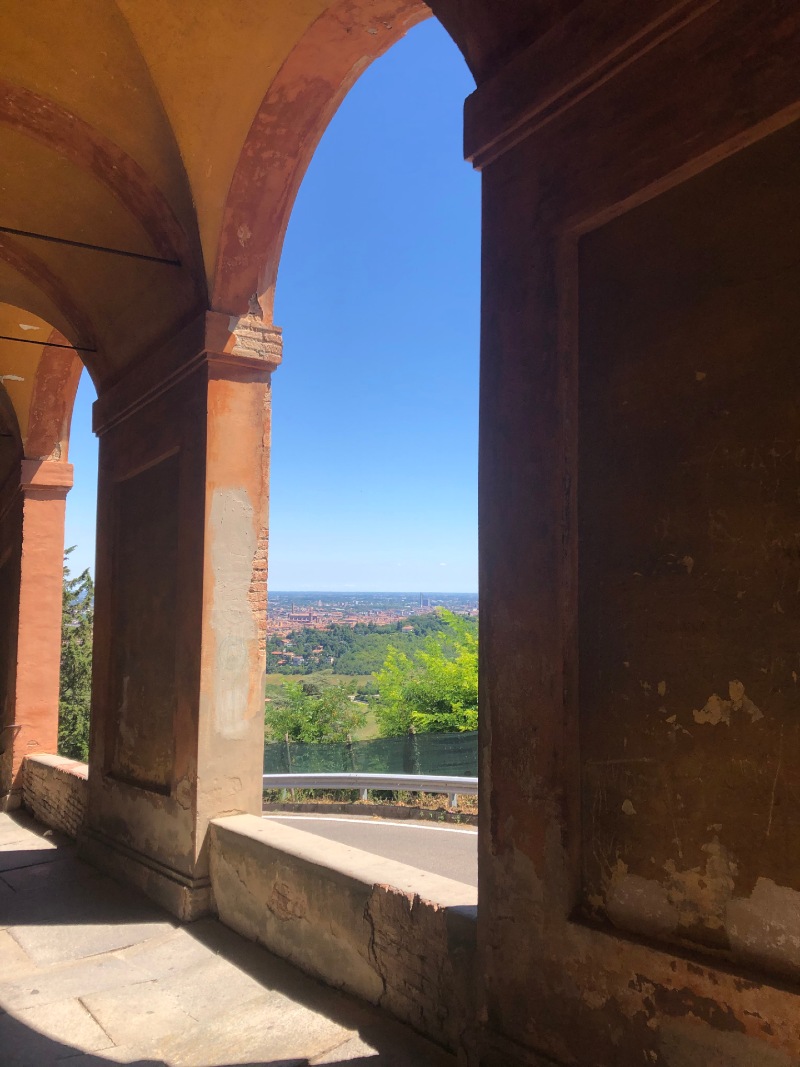
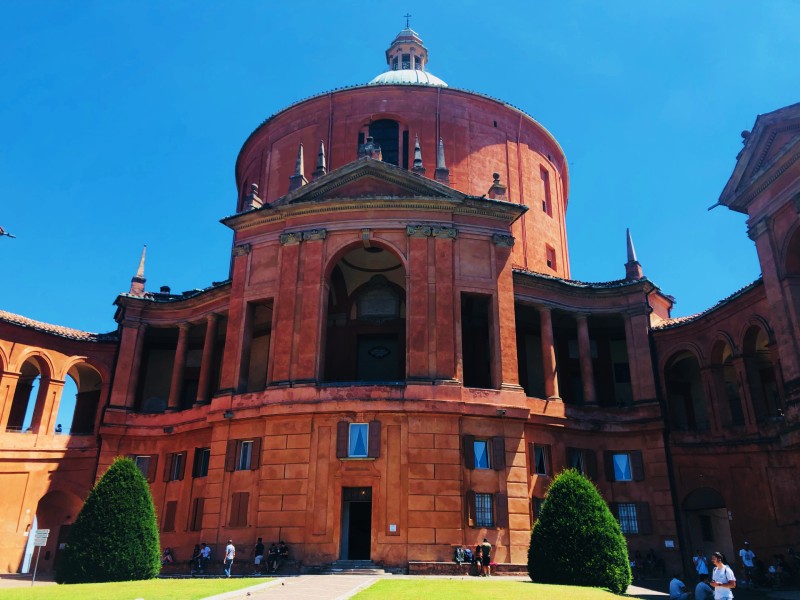
Often not on the ‘top 10 in Bologna’ is the Sanctuary of the Madonna di San Luca, which my friend recommended. After 24 hours of eating pasta and cheese, my daughter and I felt we needed a walk. I slathered on a bunch of sunscreen only to realize I didn’t need it. The climb to the top is completely covered by an arcade (those porticos again) 3.8 kilometers long–the longest in the world. While the church at the top is beautiful and a pilgrimage for many, the walk was the best part of this experience.
Savor the Café Life

What I love so much about living in Europe is the slower pace of life, even on the weekdays. Around 4-5 pm in Italy, you’ll find people of all ages sitting at cafes enjoying an aperitif (Aperol Spritz, Prosecco, or Hugo) and some snacks (olive or chips). Make sure you experience this, as it’s what you do when in Italy (or France, Spain, Czech, Germany).